Direct answer
Create accurate NFC app documentation with task-based guides, tested device context, safe code samples, accessible screenshots, versioning and structured data.
Separate tutorials, how-to guides, explanation and reference
A tutorial teaches a first success, a how-to solves one task, an explanation builds understanding and a reference defines exact behavior. Mixing all four into every page makes both users and search engines work harder to identify the answer.
- Intent
- Give each page one primary question and link to deeper concepts or API details instead of copying the same overview everywhere.
- Navigation
- Group related pages into fundamentals, writing, automation, security and troubleshooting hubs with descriptive anchors.
Use the product as the source of truth
Documentation must match actual screens, feature flags, permission behavior and error states in the released build. Product names and screenshots should come from an approved inventory rather than memory or promotional assumptions.
- Capability boundary
- Describe NFC behavior as available or implemented, but reserve verified claims for physical-device evidence.
- Single ownership
- Assign an owner to update help when UI labels, backend behavior or safety limits change.
Version help alongside the application
Record the app version, Android range and meaningful modified date for instructions that can change. Do not refresh every article date during a routine site build when its content was not reviewed.
- Release mapping
- Link release notes to the help pages affected by changed navigation, permissions, storage or protocol behavior.
- Deprecation
- Keep a migration note for removed features and redirect retired URLs to the closest valid successor rather than deleting context.
Publish reproducible technical context
NFC examples need phone model, Android version, tag family, record type and operation state when those details influence the result. A reader should be able to repeat the setup without guessing which hardware was used.
- Test label
- Distinguish code compilation, unit-test evidence and real NFC hardware verification in the article.
- Known limits
- State OEM variation, antenna placement and unsupported protected-card scenarios next to the relevant instruction.
Write safe code and byte examples
Samples should validate input, move blocking tag I/O off the main thread, close technologies and handle TagLostException, read-only state and insufficient capacity. A short snippet that omits failure paths can teach an unsafe production pattern.
- Complete contract
- Name the imports, lifecycle boundary and expected result instead of showing an isolated method call.
- Security
- Use synthetic identifiers and test keys; never copy production secrets, real dumps or customer URLs into documentation.
Use screenshots as evidence, not decoration
A screenshot belongs near the step or capability it proves and needs alt text describing the relevant state. Captions should explain what the reader can verify in the image rather than repeat NFCMagic screen.
- Freshness
- Track screenshot source version and replace it when labels or safety controls move.
- Text equivalent
- Keep every required instruction in semantic HTML so users can zoom, translate, search and use assistive technology.
Build symptom-led troubleshooting
Start from observable outcomes such as no detection, TagLost, not writable or capacity exceeded. Each branch asks for one check, explains what it proves and points to the next safe action.
- Avoid generic advice
- Restart the phone is not a complete guide when the issue can be separated into hardware, placement, technology and payload.
- Feedback loop
- Tag support tickets by symptom and update the page when several users fail at the same undocumented step.
Use FAQ and JSON-LD accurately
Visible questions can be represented by FAQPage data, while long-form technical pages can use TechArticle with headline, dates, author, images, keywords and citations that match the page. Markup should describe content, not invent ratings or invisible answers.
- Author entity
- Identify TrustQR Ltd consistently and link the publisher URL so search systems can resolve ownership.
- Validation
- Parse JSON-LD during the build and use the Rich Results Test after deployment without assuming eligibility guarantees a special result.
Prepare content for search and AI retrieval
Lead with a direct answer, use descriptive headings, define acronyms and support claims with primary sources. Natural keyword coverage emerges from answering the topic fully; repeating one phrase in every paragraph reduces readability and trust.
- Internal links
- Use anchors that name the destination question, such as compare Android reader mode and foreground dispatch.
- Answer boundaries
- State when the app cannot verify physical NFC behavior or access protected credentials so summaries do not overclaim.
Govern translation and ongoing review
Translate meaning and platform terminology rather than assembling word-for-word fragments. Keep code, model names and protocol values left-to-right where required, and have a fluent reviewer test layout and instructions in context.
- Localization source
- Update the English source, translation status and screenshot inventory together to avoid diverging safety warnings.
- Review cadence
- Prioritize pages with impressions, support demand or changed platform behavior instead of mass-updating every date.
Quick reference
| Content type | User question | Required evidence |
|---|---|---|
| Tutorial | Can I complete a first workflow? | Tested sequence and outcome |
| How-to | How do I perform one task? | Prerequisites and recovery |
| Explanation | Why does it work this way? | Standards and architecture |
| Reference | What exactly is supported? | Versioned values and limits |
Related NFCMagic app screens
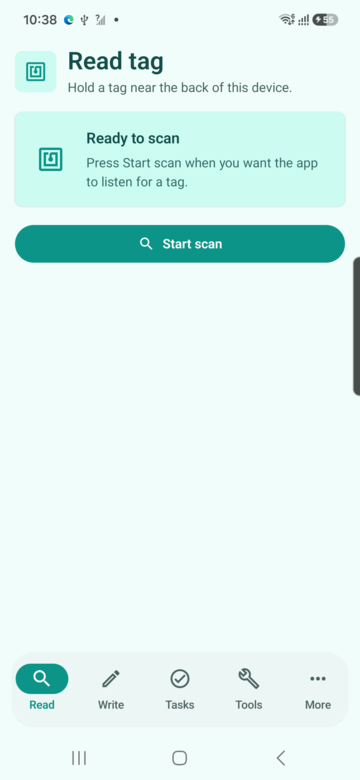
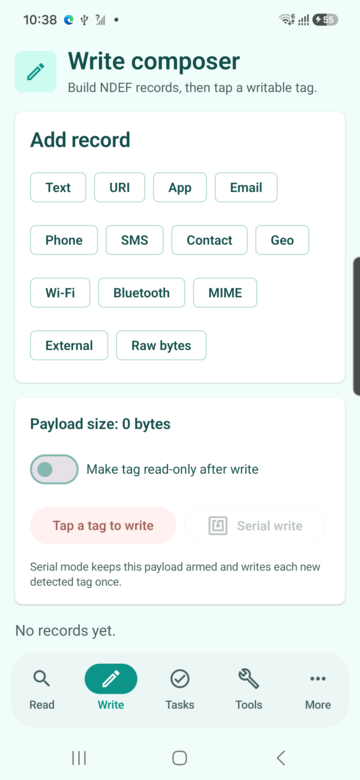
These screenshots connect this NFC app documentation guide to the related Android workflow in NFCMagic. They document interface states; radio behavior still requires a physical Android device and real tags.
Frequently asked questions
Should every help article repeat the full NFC introduction?
No. Give the direct task answer and link to one maintained fundamentals page for shared background.
Can screenshots replace written instructions?
No. Screenshots support a step, but required actions and warnings must remain available as semantic text.
Should all article dates update during deployment?
No. Change dateModified only when the visible content receives a meaningful review or revision.
Does valid JSON-LD guarantee a rich result?
No. It helps describe the page and establish eligibility, while Google decides whether a special result is shown.
Primary technical sources
- Google Search Central: Article structured data — Recommended Article properties and author markup for Google Search.
- Google Search Central: Link best practices — Guidance for crawlable internal links and descriptive anchor text.
- Android Developers: NFC overview — Platform overview for Android reader, writer and tag-discovery behavior.
- W3C: Web Content Accessibility Guidelines 2.2 — Normative accessibility requirements for web content and text alternatives.