Direct answer
Understand the NFCMagic product roadmap for makers and teams: capability areas, validation gates, compatibility work, integrations, migration policy and success metrics.
Define the audiences and their jobs
NFCMagic serves people reading a first tag, makers building automations, operators encoding many labels, developers testing protocols and brands planning product verification. Roadmap decisions should name which job improves rather than adding unrelated tools to a long menu.
- General users
- Prioritize safe read, write, QR and clear recovery with minimal configuration.
- Professional teams
- Prioritize repeatability, profiles, batch evidence, controlled backends and exportable diagnostics.
Map the current capability surface
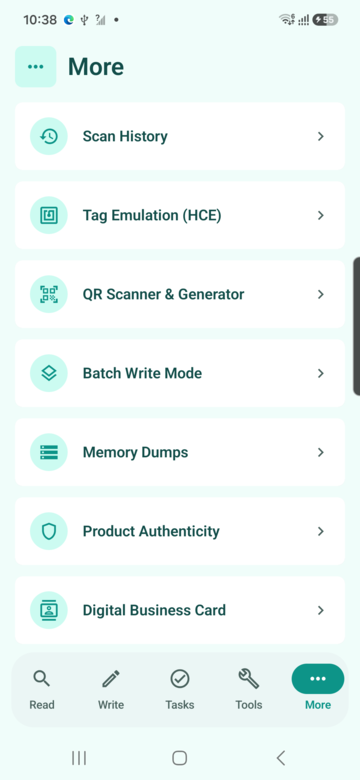
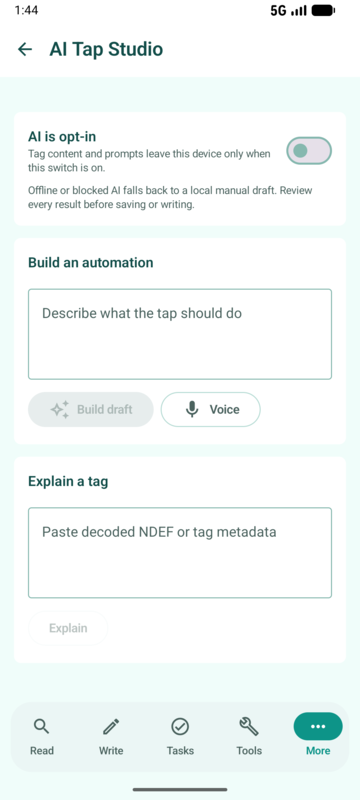
The product groups core reading and writing, task automation, AI-assisted task drafting, direct tag tools, QR, history, HCE, memory diagnostics, Dynamic Smart Tags, authenticity, business cards and analytics. A public roadmap should connect future work to these stable areas.
- Core before breadth
- Reliability and understandable states in read and write remain dependencies for every advanced workflow.
- Safety boundary
- Protected-card cloning, unauthorized credentials and unsupported operating-system controls remain intentionally outside the product.
Use Now, Next and Later without false promises
Now describes work actively being validated, Next describes the highest-confidence follow-up and Later captures researched opportunities without a committed date. Each item needs a user outcome, dependencies and exit criteria.
- No calendar fiction
- Do not publish a date until engineering, device testing, policy and backend dependencies support it.
- Change log
- When priorities move, record the reason so teams can plan without treating an old screenshot as a contract.
Expand chip and device compatibility deliberately
Compatibility work should start from documented user demand and available physical samples. Add chip identification, NDEF behavior or secure protocol support only after the team can test representative devices and failure paths.
- Tag matrix
- Track chip family, inlay construction, operation, Android versions and known limitations.
- OEM matrix
- Maintain representative Google, Samsung and other devices across the supported OS range instead of optimizing for one handset.
Require validation gates for NFC features
Code compilation and unit tests are necessary but do not verify RF behavior. A feature moves to stable only after real-device read, write, movement, malformed input, locked target and recovery scenarios are completed by an authorized tester.
- Evidence tiers
- Label tests as unit, integration or physical-device verification so release notes never overstate confidence.
- Regression
- Retain known tags and scenarios for every severe failure fixed in a prior release.
Apply security, privacy and accessibility gates
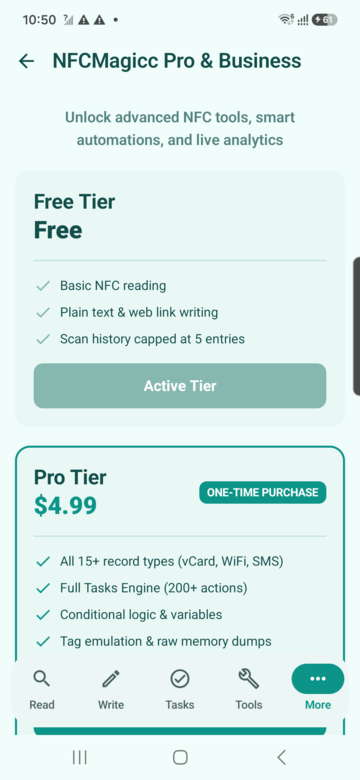
Every roadmap item identifies permissions, stored data, external endpoints, irreversible actions and accessibility states before implementation. Advanced capability does not justify hiding risk behind a Pro label.
- Security review
- Threat-model dynamic links, connectors, provisioning and imported files before enabling them for arbitrary data.
- Accessibility review
- Test screen-reader labels, non-color feedback, large text and physical positioning guidance in complete workflows.
Grow integrations through stable contracts
Webhook, Home Assistant, MQTT and future connectors should share a bounded action interface, authentication storage and observable result model. New integrations then add adapters instead of bypassing the task safety layer.
- Contract
- Define timeout, retry, idempotency and redaction rules once for the connector framework.
- Opt-in
- Keep user-configured endpoints inactive until a profile names them and required permission or trust checks pass.
Protect backward compatibility and migrations
Saved profiles, history, dynamic tag records and physical NDEF payloads can outlive the app version that created them. Schema versions and migration tests prevent a release from stranding deployed tags or silently changing automation behavior.
- Read old, write new
- Parse supported historical formats into the current model while producing only the latest documented format for new saves.
- Physical contract
- Keep resolver URLs and app-link paths stable or maintain permanent redirects because deployed tags cannot always be recalled.
Measure outcomes instead of feature count
Success metrics should show whether users complete a reliable task: first-tap read rate, verified-write rate, batch reject rate, recovery success and safe resolver availability. Counting screens or actions encourages breadth without quality.
- Privacy-aware metrics
- Prefer aggregate operational measures and local diagnostics over collecting raw tag content.
- Support signal
- Track repeated error categories and abandoned flows to choose the next reliability investment.
Maintain a transparent roadmap record
Each roadmap revision should state what changed, why it matters and which documentation or compatibility matrix was updated. Completed items link to release notes and help; removed ideas remain visible with a short reason when users depended on them.
- Ownership
- Assign one product owner to reconcile app, Play listing, website and support claims.
- Feedback
- Collect structured requests by audience, problem, frequency and safety impact rather than ranking only the loudest feature name.
Quick reference
| Horizon | Meaning | Evidence expected |
|---|---|---|
| Now | Active implementation or validation | Named owner and acceptance gate |
| Next | High-confidence queued outcome | Dependencies understood |
| Later | Researched opportunity | No promised date |
| Out of scope | Intentional product boundary | Published reason and safe alternative |
Related NFCMagic app screens
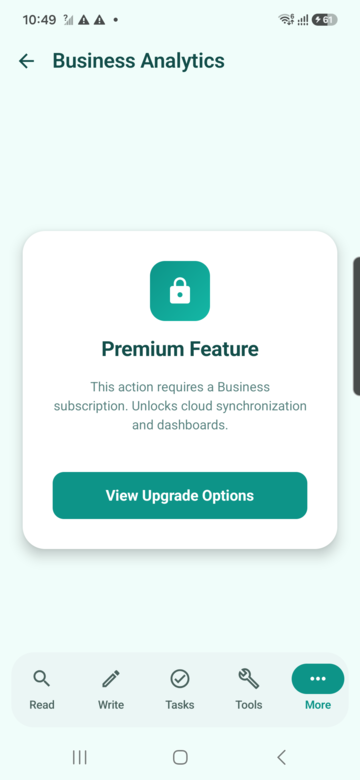
These screenshots connect this NFCMagic roadmap guide to the related Android workflow in NFCMagic. They document interface states; radio behavior still requires a physical Android device and real tags.
Frequently asked questions
Does the roadmap guarantee delivery dates?
No. Now, Next and Later communicate confidence and sequence; a date should appear only when validation and dependencies support it.
How is NFC hardware support added?
The team needs documentation, real samples, supported Android devices, error handling and a physical verification matrix.
Will NFCMagic add protected access-card cloning?
No. Secret-key credentials and unsupported fixed-UID cloning remain outside the legal and technical product boundary.
What makes a roadmap item complete?
Implementation, tests, physical-device evidence where NFC is involved, documentation, accessibility and safe migration must all reach their acceptance criteria.
Primary technical sources
- Android Developers: NFC overview — Platform overview for Android reader, writer and tag-discovery behavior.
- Android Developers: Accessibility principles — Current Android guidance for labels, non-color cues and accessible interaction.
- Android Developers: Privacy checklist — Platform guidance for data minimisation, permissions and user control.
- NFC Forum specifications — Primary index for NDEF, record types and NFC Forum tag specifications.