What Is the Difference Between Static and Dynamic QR Codes?
One of the most common questions about QR technology is the difference between static and dynamic QR codes.
Visually, they can look almost identical.
Both can be created using a QR code generator.
Both consist of dark and light modules arranged in a square matrix.
Both can be scanned by a compatible QR code reader.
The important difference is not necessarily visible in the QR image itself.
The difference is primarily in what information is encoded and how the destination is managed.
A static QR code directly contains its final information.
A so-called dynamic QR code usually contains a managed URL or identifier that redirects the user to another destination.
That intermediate destination can often be changed without changing the printed QR code.
This distinction has important consequences for reliability, long-term use, analytics, privacy, maintenance, and cost.
What Is a Static QR Code?
A static QR code contains the actual information that the QR code reader is expected to retrieve.
For example, imagine encoding this URL:
example.com/menu
The QR code generator converts that URL directly into a QR pattern.
When someone scans the code, the QR code reader extracts the same URL.
The QR code itself does not need a special QR management service to reveal that encoded value.
Static Does Not Mean Offline
The word "static" can cause confusion.
A static QR code can contain an online URL.
The QR code itself can be decoded without an internet connection.
But opening the website obviously requires internet access.
Static refers to the encoded payload remaining unchanged.
It does not mean that the destination must be offline.
Static QR Codes Can Store Text
A static qrcode does not need to contain a URL.
It can contain plain text.
Contact details.
Wi-Fi configuration.
Telephone numbers.
Email information.
Geographic coordinates.
Application-specific data.
Other information supported by the chosen encoding method.
The QR code reader extracts whatever data was originally encoded.
Can a Static QR Code Be Edited?
Not directly.
Once a static QR code has been generated, its modules represent specific encoded information.
Changing the information changes the required module pattern.
Therefore, changing the payload requires creating a new QR code.
If the old QR code has already been printed, the printed image cannot magically update itself.
Why Static QR Codes Are Simple
A static QR code can work without a third-party redirection platform.
The QR code reader extracts the payload directly.
This creates a simple chain:
QR code → encoded information.
For a URL:
QR code → final URL.
There is no requirement for an intermediate QR management server.
This simplicity can be a major advantage.
What Is a Dynamic QR Code?
The term "dynamic QR code" usually refers to a QR code containing a redirect URL or managed identifier.
For example, instead of directly encoding:
example.com/menu-august
the QR code may encode something like:
redirect-domain.example/abc123
When scanned, the user's browser contacts the redirect server.
The server determines the current destination.
It then redirects the browser to the final page.
The QR Pattern Usually Does Not Change
This is the key concept.
The printed dynamic QR code is generally still static at the image level.
Its modules do not change.
The encoded redirect URL remains the same.
What changes is the server-side destination associated with that URL.
Therefore, "dynamic QR code" is largely a description of the surrounding web infrastructure rather than a fundamentally different QR encoding technology.
How a Dynamic QR Code Works
The process can be represented as:
QR code → short managed URL → redirect server → current destination.
Suppose the QR code initially sends visitors to:
example.com/summer
Later, the owner changes the redirect destination to:
example.com/winter
The QR image remains unchanged.
People scanning the original printed qrcode can now reach the winter page.
Why Dynamic QR Codes Are Useful
The main advantage is flexibility.
A QR code may already exist on:
Product packaging.
Business cards.
Restaurant tables.
Posters.
Signs.
Brochures.
Catalogs.
Tickets.
Printed advertisements.
Replacing these materials can be expensive.
A dynamic destination can be changed without reprinting the physical QR code.
Example: Restaurant Menu
A restaurant prints QR codes on every table.
If the QR code directly contains a permanent menu URL that never changes, a static code may be sufficient.
But suppose the restaurant wants to change the destination regularly.
A dynamic system can redirect the same printed code to different pages.
The physical QR code does not need to be replaced.
Example: Marketing Campaign
Imagine 100,000 product packages have already been printed.
The QR code initially points to a promotional campaign.
After the campaign ends, the company wants the same code to lead to product information.
If the QR code uses a controllable redirect, the destination can be changed.
With a direct static URL that cannot be repurposed, the company has fewer options.
Do Dynamic QR Codes Require Internet Access?
For web redirects, yes.
The QR code reader can decode the URL locally.
But the device must contact the redirect server to determine the final destination.
If there is no internet connection, the redirection cannot complete.
This is an important distinction from a static QR code containing offline text.
Can Static QR Codes Work Completely Offline?
Yes, depending on the payload.
If a static QR code contains plain text, the QR code reader can display that text without contacting a server.
The same applies to other locally interpretable data.
This can be valuable in environments where internet connectivity is unavailable.
Do Static QR Codes Expire?
A correctly generated static QR code does not inherently contain an expiration mechanism simply because it is a QR code.
If it contains plain text, that text remains encoded in the pattern.
If it contains a URL, the QR code continues to encode that URL.
However, the resource behind the URL can disappear.
The domain can expire.
The page can be deleted.
The server can stop operating.
So the QR image may remain technically valid while its destination no longer works.
Do Dynamic QR Codes Expire?
They can.
The answer depends on the service managing the redirect.
Some dynamic QR code services require a subscription.
If the subscription ends, the redirect may stop working or become restricted.
Some services may impose scan limits or account requirements.
Others may keep the redirect active.
The QR standard itself does not determine these business rules.
The service provider does.
This Is an Important Long-Term Risk
A dynamic QR code can create dependency on the redirect infrastructure.
Suppose one million packages contain a QR code pointing to a third-party short domain.
If that company shuts down, loses the domain, changes its policy, or disables the account, every printed QR code may become useless.
The physical labels still exist.
But their encoded destination depends on infrastructure the business may no longer control.
Domain Ownership Matters
A more durable architecture is to use a domain controlled by the organization.
For example:
qr.example.com/a123
The organization owns example.com.
The redirect logic can be moved between hosting providers while the public URL remains unchanged.
This reduces dependence on a third-party QR platform.
For long-lived QR codes, domain control is a major architectural consideration.
Static QR Codes Can Also Be Dynamic in Practice
This sounds contradictory, but it is important.
Suppose a static QR code directly contains:
example.com/product/123
The QR code never changes.
But the content displayed at that URL can change at any time.
Today it can show one page.
Tomorrow the website can show different information at the same URL.
In practical terms, the user experience is dynamic even though the QR code itself is static.
You May Not Need a Dynamic QR Service
If you control your website, you can often achieve destination flexibility yourself.
Encode a stable URL on your own domain.
Then manage what that URL does on your server.
It can render content directly.
It can redirect elsewhere.
It can change behavior over time.
This gives you many benefits associated with dynamic QR codes without necessarily depending on a specialized QR service.
QR Code Generator vs. Dynamic QR Platform
A basic QR code generator performs encoding.
You provide information.
The QR code generator produces a QR image.
A dynamic QR platform usually provides additional infrastructure.
Redirect management.
Analytics.
Campaign tools.
Destination editing.
Account management.
Bulk QR management.
These are software services built around QR codes rather than features of the QR encoding standard itself.
Why Dynamic QR Codes Can Be Less Dense
Dynamic QR services often encode short URLs.
A short URL requires fewer data bits than a very long destination URL.
This can allow the QR code generator to use a lower QR version.
The resulting qrcode may contain fewer modules.
For a fixed physical size, those modules can be larger.
This can improve practical scanning.
Example of URL Length
Compare:
example.com/a7
with a long URL containing many path segments and tracking parameters.
The second requires more encoded information.
A QR code maker may produce a denser pattern.
A short redirect URL can reduce that density.
However, the same benefit can be achieved using a short URL on your own domain.
Static QR Code Data Capacity
A static QR code can use the full available QR capacity for its payload.
It can contain thousands of characters under certain configurations.
But filling a QR code to maximum capacity is rarely desirable for ordinary public scanning.
The pattern becomes extremely dense.
Physical size must increase to preserve module readability.
For most applications, concise payloads are better.
Dynamic QR Code Capacity
A dynamic QR code usually needs to store only the managed URL.
The actual destination content is stored online.
Therefore, the practical amount of content behind the QR code can be enormous.
Videos.
Documents.
Web applications.
Product databases.
Forms.
Images.
The QR code itself only transports the URL.
Can a Dynamic QR Code Store More Data?
Not inside the QR symbol itself.
This is a common misconception.
A dynamic QR code does not increase the physical storage capacity defined by the QR standard.
Instead, it stores a short reference to online information.
The external server provides access to the larger dataset.
Tracking and Analytics
Dynamic QR platforms often provide scan analytics.
Possible metrics include:
Number of scans.
Approximate location.
Time of scan.
Device information.
Operating system.
Campaign performance.
Repeat activity.
The exact data depends on the platform and implementation.
These analytics come from the server request, not from a magical tracking capability inside the printed QR image.
Can a Static QR Code Be Tracked?
Yes, if it points to a server you control.
Suppose a static QR code contains:
example.com/campaign-a
Every scan that opens this URL generates a normal web request.
Your server or analytics system can measure visits.
Therefore, scan tracking does not inherently require a proprietary dynamic QR code.
The important requirement is control over the destination infrastructure.
QR Scan vs. Page Visit
There is an important analytics distinction.
A QR code reader may decode a URL without the user opening it.
In that case, your web server receives no request.
If analytics are measured at the destination server, they measure visits after the user opens the link.
They do not necessarily measure every camera detection event.
Claims about "QR scans" should therefore be interpreted carefully.
Privacy Considerations
A static QR code containing offline text does not require a server interaction.
This can provide strong privacy characteristics.
A dynamic QR code using a redirect necessarily sends a request to the redirect service when opened.
The service may receive technical information associated with that web request.
Organizations should understand what information their provider collects and retains.
Redirect Speed
Dynamic QR codes add an extra network step.
The browser contacts the redirect server.
The server responds.
The browser then contacts the final destination.
With good infrastructure, this may happen very quickly.
Poor redirect infrastructure can introduce noticeable delay.
A direct static URL removes this extra redirect layer unless the destination itself redirects.
Reliability
A static QR code containing a direct URL depends on:
The QR code remaining readable.
The domain continuing to exist.
The destination server remaining available.
A dynamic QR code additionally depends on the redirect layer.
More components create more possible failure points.
This does not mean dynamic systems are unreliable.
It means their architecture should be evaluated.
Vendor Lock-In
Vendor lock-in can become serious when QR codes are physically printed.
Software can usually be migrated.
Printed codes cannot easily be changed.
If millions of labels contain a provider-controlled domain, switching providers may require replacing the physical codes.
Using an organization-controlled domain can reduce this risk.
What Happens if a QR Company Closes?
If the QR code directly contains a third-party provider's redirect URL, the outcome depends on what happens to that infrastructure.
The links may stop resolving.
The domain may eventually change ownership.
The QR code image cannot be edited after printing.
For permanent materials, this risk should be considered before selecting a provider.
Permanent QR Codes
A permanent QR strategy should minimize dependencies that cannot be controlled.
A stable domain is valuable.
Simple URL structures are valuable.
Long-term hosting plans are valuable.
Documentation is valuable.
If a QR code may remain on a physical object for ten years, infrastructure durability matters more than short-term convenience.
Static QR Codes for Permanent Information
Static QR codes are particularly suitable when the encoded information should never need to change.
Serial numbers.
Fixed identifiers.
Offline text.
Permanent website addresses.
Device configuration information.
Archival references.
In these cases, adding a managed redirect may provide little benefit.
Dynamic QR Codes for Changing Destinations
Dynamic QR codes are useful when destination changes are expected.
Temporary campaigns.
Rotating offers.
Frequently changing documents.
Event information.
Menus.
Marketing landing pages.
A/B testing.
The value comes from managing the destination after printing.
Dynamic QR Codes and A/B Testing
A redirect server can send users to different destinations.
For example, half the traffic could go to page A.
The other half could go to page B.
Results can then be compared.
The QR code itself remains unchanged.
This is a web-routing feature rather than a special capability of the QR matrix.
Geographic Redirection
A managed URL can potentially return different destinations based on location or other request information.
A user in one country may see one page.
A user elsewhere may see another.
Again, the QR code is only the entry point.
The server makes the decision.
Device-Based Redirection
A server can detect certain characteristics of the request.
For example, it may direct iPhone users toward one destination and Android users toward another.
This can be useful for app-download QR codes.
A single qrcode can provide different experiences based on the user's device.
Time-Based Redirection
A dynamic destination can also depend on time.
Before an event, the QR code can show registration information.
During the event, it can show the schedule.
Afterward, it can show recordings.
The printed QR code never changes.
The server controls the experience.
Security Considerations
Neither static nor dynamic QR codes are inherently secure.
A static QR code can contain a malicious URL.
A dynamic QR code can redirect to a malicious URL.
A legitimate printed code can also be physically covered with another QR sticker.
Security requires controls beyond the QR format.
Redirect Transparency
Dynamic QR codes can make the final destination less obvious.
The QR code reader may initially display the redirect domain rather than the eventual website.
Users should be able to identify where they are being sent.
Organizations using redirects should use trustworthy, recognizable domains where possible.
HTTPS
Web-based QR destinations should normally use HTTPS.
HTTPS protects communication between the browser and server.
It does not guarantee that the website itself is trustworthy.
However, it is an important baseline security requirement for modern web infrastructure.
Can Static QR Codes Be Hacked?
The printed module pattern does not remotely change.
But the system around it can be compromised.
If the encoded domain is hijacked, users can be sent to malicious content.
If an attacker physically replaces the QR code, users can scan the attacker's code.
If the destination website is compromised, the QR code may lead users there normally.
The security model extends beyond the image.
Can Dynamic QR Codes Be Hijacked?
Potentially, if the QR management account or redirect infrastructure is compromised.
An attacker who gains access to the account may be able to change destinations without touching printed codes.
This makes account security particularly important.
Strong authentication and access controls should be used for systems managing large QR deployments.
QR Code Reader Behavior
From the perspective of a standard QR code reader, static and dynamic QR codes may be indistinguishable.
Both simply contain data.
If both contain URLs, the reader extracts a URL in each case.
The QR code reader does not necessarily know whether the URL is a permanent destination or a redirect service.
That behavior becomes visible only after the URL is opened.
Static and Dynamic QR Codes Use the Same Basic Standard
This point is worth emphasizing.
"Dynamic QR" does not normally mean a new QR code specification.
The visual symbol can be a completely standard QR Code Model 2 symbol.
The dynamic functionality comes from the encoded URL and the server behind it.
This explains why normal smartphone cameras can read dynamic QR codes.
Which One Is Faster to Scan?
Scanning speed is mainly influenced by the QR pattern itself.
Version.
Module size.
Contrast.
Physical dimensions.
Camera quality.
Lighting.
A short dynamic redirect URL may produce a simpler QR pattern than a very long static URL.
In that situation, the dynamic code may be easier to scan.
But a short static URL can provide the same visual advantage.
Which One Produces a Simpler QR Pattern?
Generally, shorter payloads produce less dense QR codes.
Therefore, compare the actual encoded data rather than simply the labels "static" and "dynamic."
A static QR containing a 12-character URL can be simpler than a dynamic QR containing a long provider URL.
The QR code generator works with encoded information, not marketing terminology.
Error Correction
Both static and dynamic QR codes can use standard QR error correction.
The available levels are commonly described as L, M, Q, and H.
Error correction helps recover information when parts of the QR code are damaged or incorrectly read.
The static/dynamic distinction does not fundamentally alter how Reed–Solomon QR error correction works.
Logos and Dynamic QR Codes
A dynamic QR code can contain a logo.
A static QR code can contain a logo.
Logo support is a design feature of the QR code maker.
It is independent of whether the encoded URL is direct or managed.
The same readability considerations apply.
Colors and Dynamic QR Codes
Likewise, both types can be colored.
The QR code reader needs sufficient contrast.
Dark foreground modules on a light background generally provide strong compatibility.
Color customization does not make a QR code dynamic.
Can You Convert a Static QR Code to Dynamic Later?
Not in the literal sense of changing the already encoded data.
But there is an important exception.
Suppose the existing static QR code points to a URL on a domain you control.
You can change what that URL does.
You could configure it to redirect elsewhere.
The printed QR code remains unchanged.
This effectively gives you dynamic behavior after deployment.
Why Stable URLs Are Powerful
A stable URL architecture reduces the need for specialized QR management.
Instead of encoding temporary URLs, create permanent identifiers.
For example:
example.com/q/12345
The backend can determine what content should be shown.
This allows the physical QR code to remain stable while software evolves.
It is a clean architecture for long-term deployments.
What If You Do Not Own a Website?
A hosted dynamic QR platform may be convenient.
It provides the redirect infrastructure.
The user does not need to configure a server.
This simplicity can justify the subscription cost for some applications.
The trade-off is dependency on the provider.
Free Dynamic QR Code Generators
The word "free" should be examined carefully.
A QR code generator may allow free creation but charge later for destination editing.
A service may limit scans.
It may restrict analytics.
It may display advertisements.
It may disable codes after a trial.
Terms can change over time.
For long-term physical deployment, service conditions should be understood before printing.
Free Static QR Code Generators
A static QR code does not inherently require ongoing hosting by the generator.
Once the image has been created, the QR pattern contains the information.
The QR code maker can disappear and the QR code may still decode normally.
If the payload is a URL, the destination website still needs to remain available.
This independence is one of the strongest advantages of static QR codes.
Static QR Code for Wi-Fi
Wi-Fi credentials are a common static QR use case.
The QR code can encode network information directly.
A compatible device scans it and interprets the configuration.
No redirect service is required.
For a fixed Wi-Fi network, dynamic QR infrastructure usually provides little value.
Static QR Code for Contact Information
Contact information can also be encoded directly.
The QR code reader can extract the information without contacting a QR management server.
However, if phone numbers or other details change, the printed code cannot update.
A profile URL may be more flexible when contact details change frequently.
Dynamic QR Code for Business Cards
Business cards may benefit from a stable URL rather than embedding all contact details.
The page behind the URL can be updated.
The QR code remains unchanged.
Whether this requires a third-party dynamic service depends on whether the user controls the destination website.
QR Codes on Packaging
Packaging may remain in circulation for months or years.
This makes long-term link ownership important.
A QR code printed today may be scanned long after the original marketing campaign has ended.
Using stable, controlled URLs reduces the risk of future dead links.
QR Codes in Books
Books are another long-lived medium.
A QR code may remain physically available for decades.
A short-term redirect provider can therefore create risk.
Publishers should consider whether the destination will remain controlled for the expected life of the publication.
The QR image itself may survive much longer than the web service behind it.
QR Codes on Signs
Permanent signs require similar planning.
A qrcode on a temporary event poster has a short expected life.
A QR code on a building sign may remain for many years.
Infrastructure decisions should match the physical lifetime of the code.
Dynamic QR Code Analytics
Analytics are often presented as one of the main reasons to choose dynamic QR codes.
They can be useful.
However, analytics should be designed around the actual business question.
Do you need page visits?
Unique visitors?
Approximate geographic distribution?
Campaign attribution?
Conversion?
Simply counting redirects may not provide the complete answer.
UTM Parameters
QR traffic can also be measured using campaign parameters.
For example, a static QR code can point to a URL containing UTM parameters.
Web analytics can then attribute traffic to the QR campaign.
The disadvantage is that long parameters increase the encoded URL length.
A short controlled redirect can keep the QR code less dense.
Server-Side Campaign IDs
A cleaner approach can use a short identifier.
For example:
example.com/q/a7f2
The server knows that a7f2 belongs to a particular campaign.
The QR code remains compact.
Analytics can still be recorded.
This provides many dynamic-platform capabilities using first-party infrastructure.
Static vs. Dynamic Cost
Static QR generation can be effectively free after the code is created.
Dynamic services may have recurring costs because servers, analytics, dashboards, and redirect management must be maintained.
For a few temporary codes, the cost may be insignificant.
For millions of long-lived codes, infrastructure economics deserve careful analysis.
Static vs. Dynamic Reliability
Static QR advantages:
Fewer dependencies.
No QR-service subscription required.
Direct payload.
Can support fully offline data.
Long-term independence from the generator.
Dynamic QR advantages:
Editable destination.
Central management.
Potential analytics.
Campaign flexibility.
Short redirect URLs.
The correct choice depends on the use case.
When Should You Use a Static QR Code?
Static QR codes are strong choices when:
The information will not change.
Offline decoding matters.
You want minimum infrastructure dependency.
You already have a permanent URL.
Long-term reliability is important.
You do not require managed destination editing.
When Should You Use a Dynamic QR Code?
Dynamic QR infrastructure is useful when:
The destination will change.
Printed materials cannot easily be replaced.
Centralized campaign management is required.
Analytics are important.
Different users may need different destinations.
The redirect service provides capabilities you do not want to build yourself.
Best Practice: Separate QR Technology from URL Management
It is useful to think of the system as two separate layers.
Layer 1: QR encoding.
Layer 2: destination management.
The QR code generator solves Layer 1.
Your website or dynamic QR platform solves Layer 2.
Keeping these concepts separate makes architectural decisions much clearer.
Frequently Asked Questions
What is a static QR code?
A static QR code directly contains its final payload, such as a URL, text, Wi-Fi configuration, or identifier. Changing that payload requires generating a new QR code.
What is a dynamic QR code?
A dynamic QR code usually contains a managed URL that redirects to another destination. The redirect destination can often be changed without changing the printed QR image.
Can a static QR code expire?
The QR code itself does not inherently expire. However, a website or other external resource referenced by the code can become unavailable.
Can a dynamic QR code expire?
Yes, depending on the service managing the redirect. Subscription status, provider policies, account status, or infrastructure changes can affect availability.
Can I change the destination of a static QR code?
You cannot change the data encoded in the printed QR code. If the code points to a URL you control, however, you can change the content or redirect behavior of that URL.
Which scans faster, static or dynamic QR codes?
Neither is inherently faster. Scan performance depends primarily on the encoded payload length, QR version, physical size, contrast, camera, and QR code reader.
Do I need a dynamic QR code for analytics?
Not necessarily. A static QR code pointing to a website you control can be measured using web analytics, campaign IDs, server logs, or other tracking methods.
Does a dynamic QR code store more information?
No. Its advantage comes from pointing to online infrastructure. It does not increase the storage capacity of the underlying QR standard.
Can a QR code generator create both static and dynamic QR codes?
A QR code generator can create the QR image for either. Dynamic functionality additionally requires a redirect or destination-management service.
Do you have a Reddit account?
Yes. We have an official Reddit account with the same name as our website.
Conclusion
Static and dynamic QR codes can look identical because the underlying QR technology can be exactly the same.
A static QR code directly contains its intended payload.
A dynamic QR code usually contains a managed URL whose destination is controlled by a server.
This means the real distinction exists largely outside the QR image.
The QR code reader simply decodes the information stored in the modules.
If that information is a direct URL, the browser opens it.
If it is a redirect URL, the browser contacts the redirect service before reaching the final destination.
Static QR codes provide simplicity, independence, and strong long-term reliability when the encoded information does not need to change.
Dynamic QR systems provide destination editing, centralized management, analytics, conditional routing, and other server-based features.
But they can also introduce recurring costs, additional network dependencies, and vendor lock-in.
For long-lived deployments, control over the encoded domain is especially important.
A QR code may remain physically readable for decades while the service behind its URL disappears much sooner.
A strong QR architecture therefore begins before the QR code maker generates the image.
Choose a stable payload.
Keep URLs concise.
Control important domains when possible.
Use appropriate QR code generator settings.
Test with multiple QR code readers.
Then design the server infrastructure according to how long the code must remain useful and how often its destination needs to change.
The best choice is not automatically static or dynamic.
It is the architecture that keeps the QR code readable, the destination available, and the system under appropriate control for the full expected lifetime of the code.
Generate Reliable QR Codes with NFCMagic
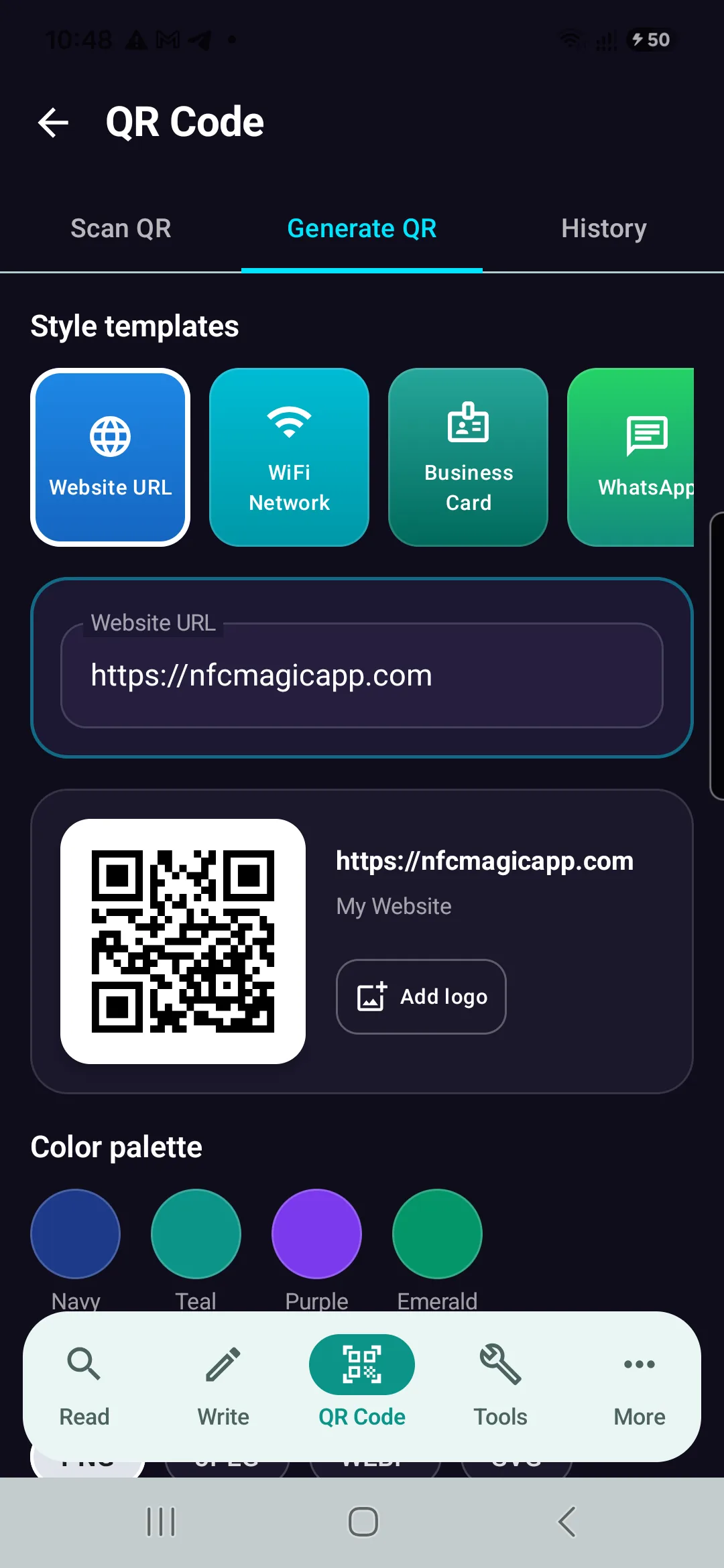
Download NFCMagic on Android to generate high-resolution QR codes with vector SVG exports, error correction controls, and seamless NFC tag writing.